PCI DSS Compliance & Certification
What is PCI DSS
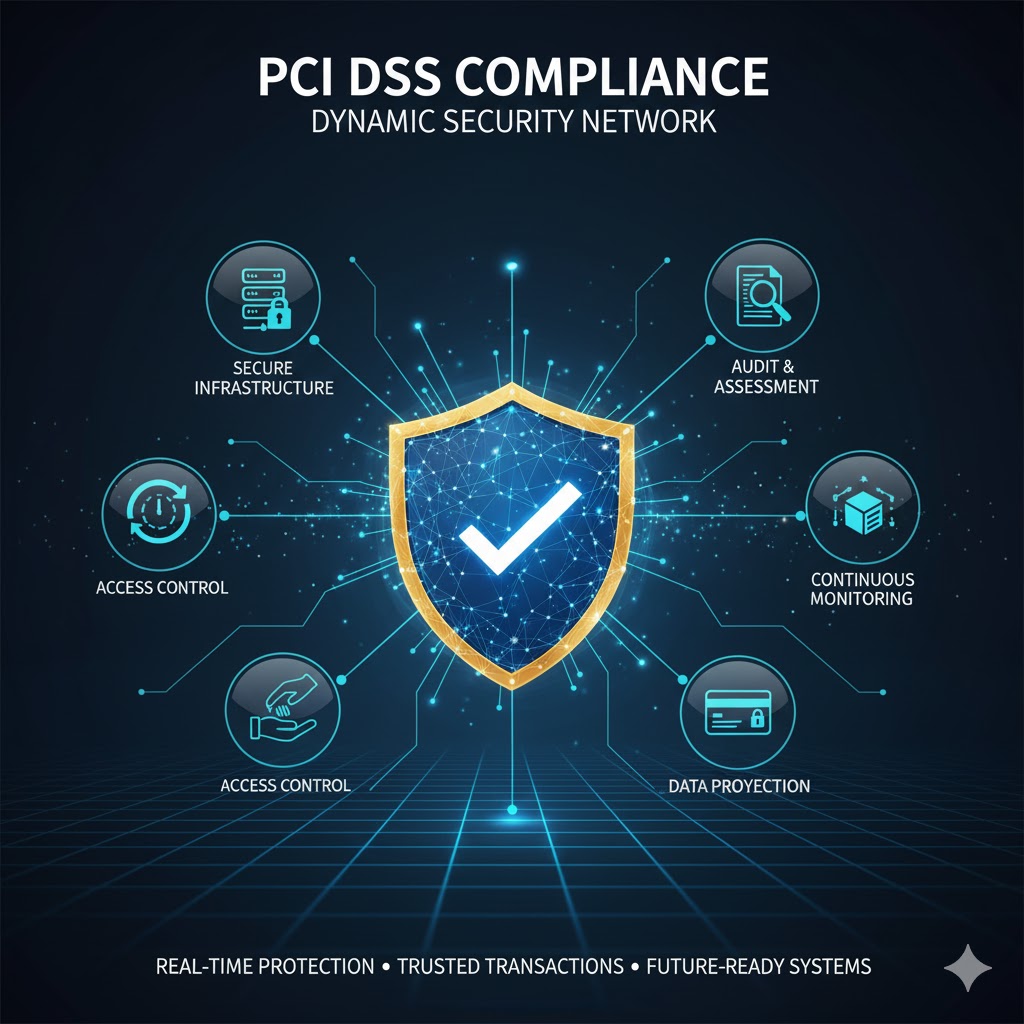
The Payment Card Industry Data Security Standard (PCI DSS) is a global security standard designed to protect cardholder data. Any business that stores, processes, or transmits credit or debit card information must achieve and maintain PCI DSS compliance. This framework is essential for preventing data breaches and fraud, safeguarding your customers’ financial information, and preserving your company’s reputation
The Important of Compliance
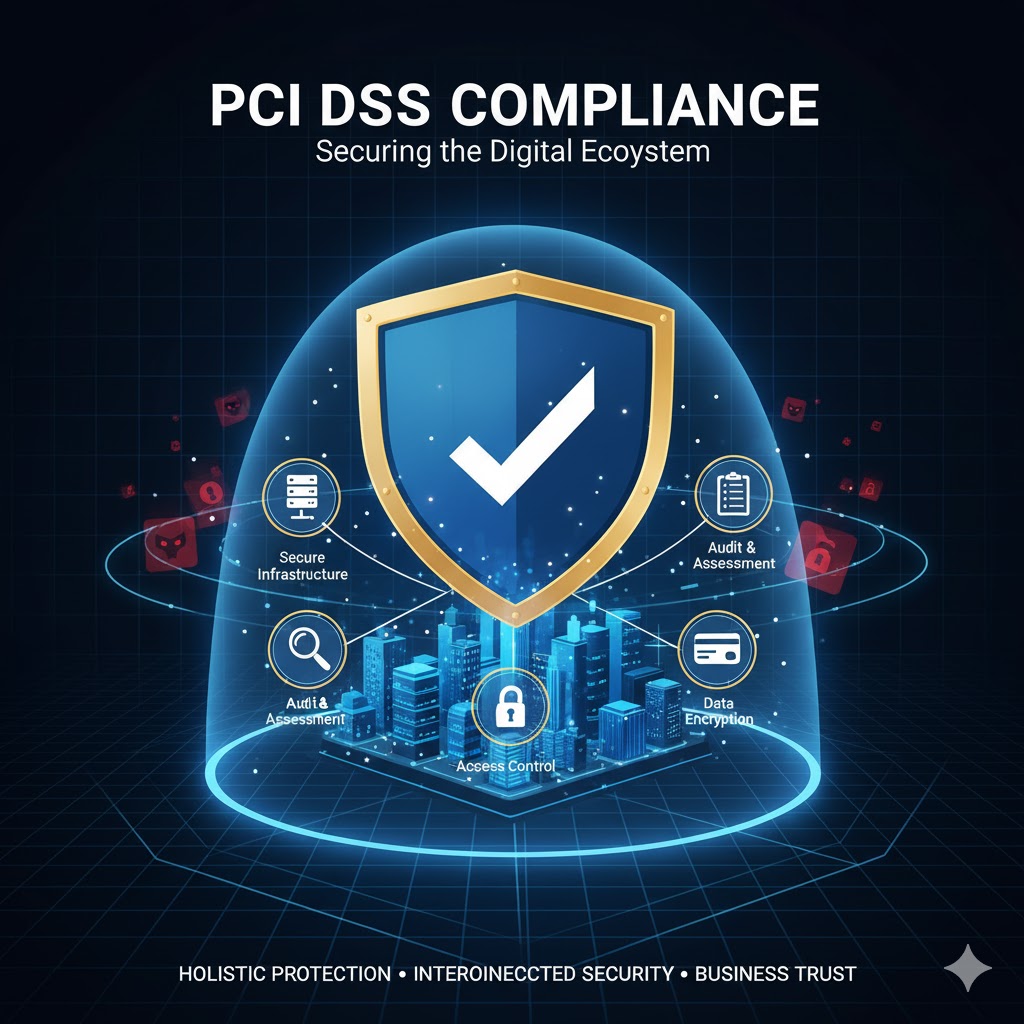
PCI DSS compliance is not just a regulatory checkbox—it’s a critical component of your business integrity. Adhering to these standards directly protects sensitive data, significantly reduces the risk of costly security incidents, and builds lasting customer trust. Non-compliance can result in severe fines, legal action, and irreversible damage to your brand.
Key Requirements of PCI DSS
The PCI DSS framework is built on a set of core requirements to create a secure payment environment. These include:
- Maintaining a secure network through firewalls and system configurations.
- Encrypting cardholder data during transmission across public networks.
- Implementing robust access control measures to restrict data to a need-to-know basis.
- Regularly monitoring and testing networks for vulnerabilities.
- Maintaining a formal information security policy for all personnel.
Achieving Certification
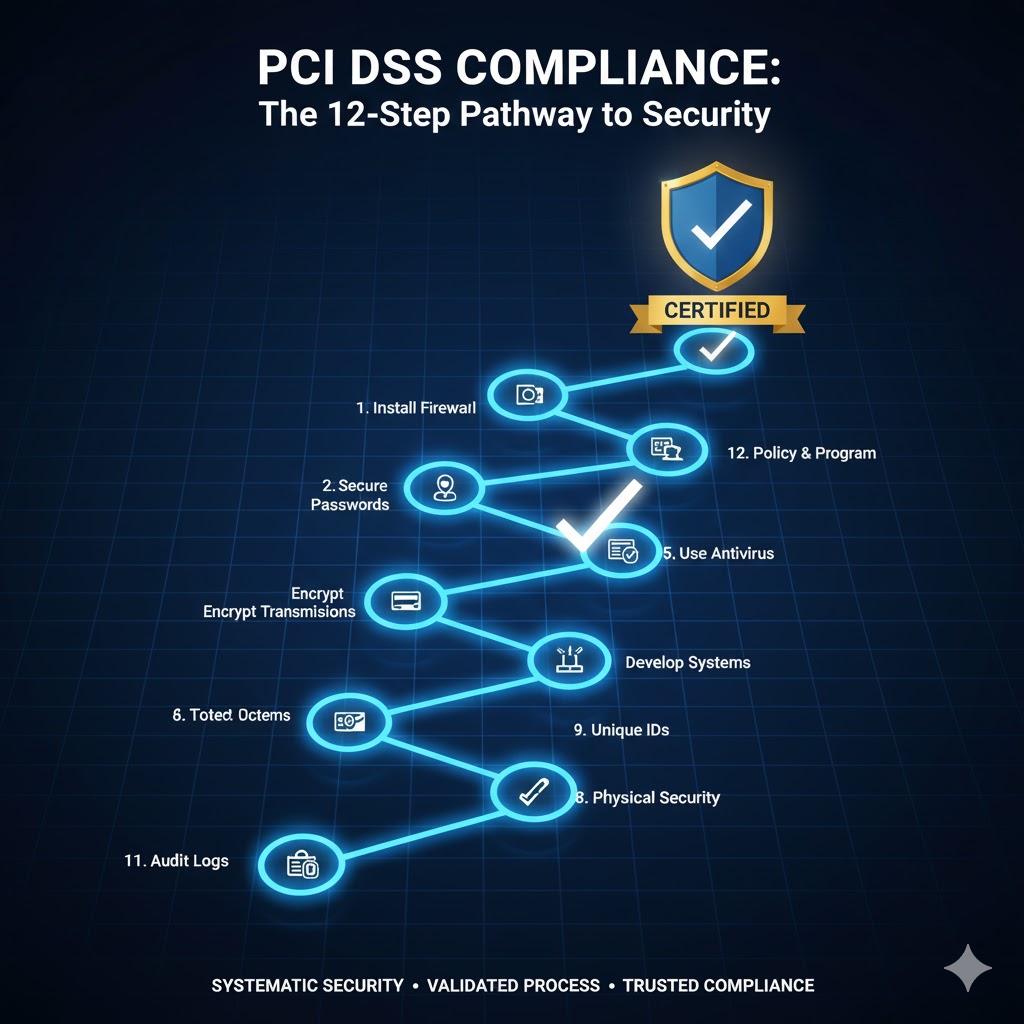
Achieving PCI DSS certification demonstrates your commitment to security. The process involves implementing the required security controls, undergoing rigorous assessments, and validating your compliance. Partnering with security experts can streamline this journey, enhancing your operational efficiency while ensuring the protection of sensitive data.

The Core Requirements of PCI DSS
For any business handling card payments, adhering to the PCI DSS framework is mandatory. These requirements form a comprehensive defense-in-depth strategy to protect cardholder data.
1. Build a Secure Network
- Install and Maintain Security Controls: Deploy firewalls and other network security tools to create a protected environment.
- Apply Secure Configurations: Harden all systems by removing unnecessary services and applying consistent, secure settings.
2. Protect Cardholder Data
- Protect Stored Data: Render data unreadable through encryption, hashing, or tokenization.
- Secure Data Transmission: Encrypt cardholder data with strong cryptography whenever it is sent across public networks.
3. Maintain a Vulnerability Management Program
- Defend Against Malware: Use anti-virus software and other advanced threats protections.
- Maintain Secure Systems: Develop a patch management process to regularly update all systems and software.
4. Implement Strong Access Control Measures
- Restrict Access by Need-to-Know: Ensure individuals can only access data essential to their job function.
- Authenticate Access: Assign a unique ID to each person and use strong authentication methods.
- Limit Physical Access: Restrict and monitor access to any physical location housing cardholder data.
5. Monitor and Test Networks Regularly
- Log and Monitor Access: Implement logging mechanisms to track and alert on all access to data and system components.
- Conduct Regular Testing: Perform quarterly vulnerability scans and annual penetration tests to identify security gaps.
6. Maintain an Information Security Policy
- Establish Security Policies: Create, publish, and maintain a formal security policy that is communicated to all personnel.
Understanding PCI DSS Compliance Levels
Your business's PCI DSS compliance level is determined by the annual volume of card transactions you process. Higher transaction volumes correspond to more rigorous validation requirements.
The four merchant levels are:
Level 1
- Transaction Volume: Over 6 million transactions per year.
- Requirements: Most stringent, requiring an annual on-site audit by a Qualified Security Assessor (QSA) and quarterly network scans by an Approved Scanning Vendor (ASV).
Level 2
- Transaction Volume: 1 to 6 million transactions per year.
- Requirements: Annual completion of a Self-Assessment Questionnaire (SAQ). Quarterly ASV scans are often required.
Level 3
- Transaction Volume: 20,000 to 1 million e-commerce transactions per year.
- Requirements: Annual submission of the appropriate SAQ and quarterly ASV scans.
Level 4
- Transaction Volume: Fewer than 20,000 e-commerce transactions OR up to 1 million total transactions per year.
- Requirements: Annual completion of an SAQ; quarterly ASV scans may be recommended or required.
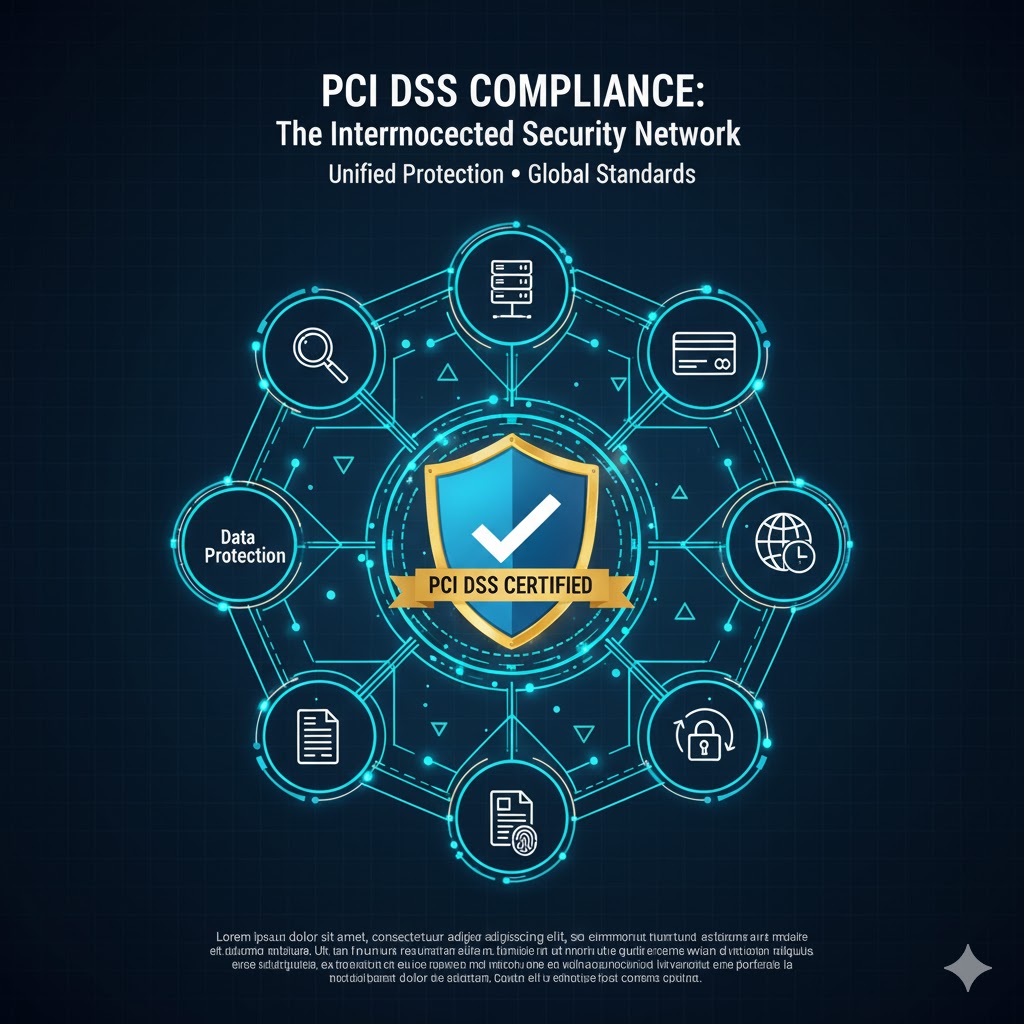
What is PCI DSS v4.0?
PCI DSS v4.0.1 is the latest version of the global security standard for protecting payment card data. Released by the PCI Security Standards Council (PCI SSC), it provides an updated framework of security controls to help businesses defend against modern threats, secure cardholder data, and build a foundation of continuous security compliance. trust. Non-compliance can result in severe fines, legal action, and irreversible damage to your brand.
What's New in PCI DSS 4.0.1: A Forward-Thinking Security Evolution
PCI DSS 4.0.1 is a significant upgrade designed to meet the demands of today’s dynamic threat landscape. It moves beyond a one-size-fits-all checklist to become a more adaptive, strategic framework that supports new technologies and evolving business practices.
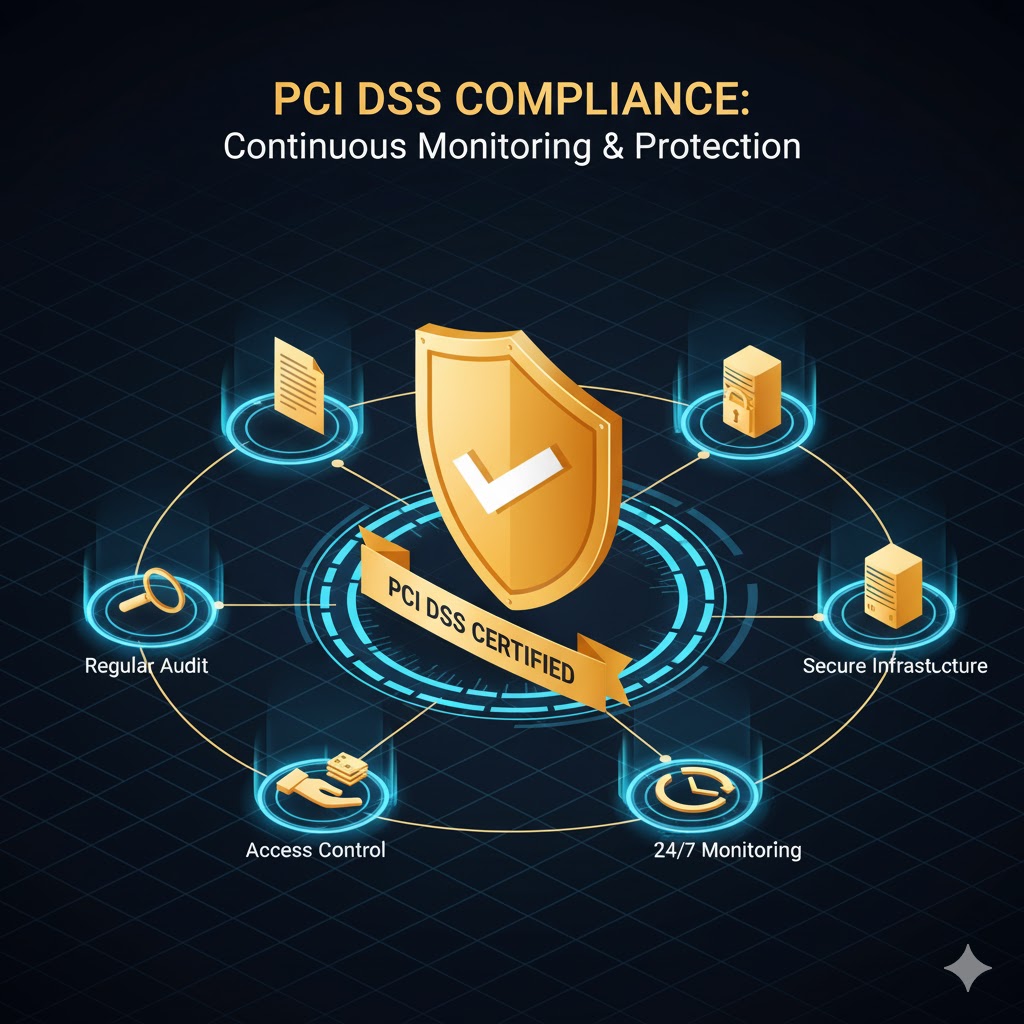
Key Enhancements in PCI DSS 4.0.1
-
Flexible Paths to Compliance : The new "Customized Approach" allows you to design your own security controls that meet the intent of the standard, offering unparalleled flexibility for unique business environments.
-
Uncompromising Access Security : Multi-Factor Authentication (MFA) is now mandatory for all personnel with access to cardholder data, dramatically reducing the risk of account compromise.
-
Proactive & Continuous Testing : Requirements for security testing are expanded, demanding more frequent and thorough vulnerability scans and penetration tests to find and fix gaps before attackers do
-
Smarter, Risk-Based Prioritization : A new emphasis on risk analysis ensures you focus your resources on the most critical vulnerabilities, aligning your security efforts with actual business impact.
-
Stronger Data Protection : The standard mandates updated, stronger encryption protocols, phasing out older, weaker methods to ensure data is unreadable even if intercepted.
-
An Empowered Human Firewall : Enhanced training requirements ensure your team is educated on modern threats like social engineering, turning your employees into a proactive line of defense.
Understanding the PCI Self-Assessment Questionnaire (SAQ)
The PCI Self-Assessment Questionnaire (SAQ) is a validation tool for merchants and service providers to report their compliance with the PCI DSS standards. Instead of a formal audit, eligible organizations can use the appropriate SAQ to self-evaluate their security controls.
Choosing the Right SAQ is Critical
There are multiple SAQ types, each designed for a specific payment environment. Selecting the correct one depends entirely on how your business accepts payments and handles cardholder data. The main categories include:
- SAQ A: For e-commerce/mail/phone-order merchants who fully outsource their payment processing. You never handle card data on your systems.
- SAQ A-EP: For e-commerce merchants who partially outsource. Your website redirects to a payment page, but you could still impact the security of the transaction.
- SAQ B & B-IP: For merchants using standalone, dial-out or IP-connected terminals with no electronic data storage.
- SAQ C-VT & C: For merchants using virtual terminals or payment application systems connected to the internet.
- SAQ P2PE: For merchants using hardware with Point-to-Point Encryption approved by the PCI Council.
- SAQ D: The most comprehensive form, for all merchants and service providers who do not fit the criteria above or who store cardholder data.
Find the Right SAQ for Your Business
Selecting the correct Self-Assessment Questionnaire (SAQ) is the critical first step in your PCI DSS compliance. The right form depends entirely on how you handle payments. If you fully outsource all card processing to a PCI-compliant third party and never store data, you likely qualify for a simpler SAQ like SAQ A. If you manage your own point-of-sale systems or store data, you will need a more comprehensive form like SAQ C or D. We help you cut through the complexity and identify the exact SAQ you need, ensuring a efficient and accurate compliance process.
PCI DSS: A Universal Standard for All Industries
Every business that accepts card payments must be PCI compliant. This universal standard is vital for:
1. Retail & E-commerce
- Securing online shopping carts and in-store payment terminals to build consumer confidence.
2. Healthcare
- Protecting patient payment data during billing and co-pay transactions, adding a critical layer of financial security.
3. Finance & Banking
- Fortifying payment gateways and transaction processing systems, the core of their operations.
Your Shortest Path to PCI DSS Certification
Stop struggling with complex requirements. Cyborgenic is your certified partner for achieving and maintaining PCI DSS compliance seamlessly. We provide a structured, step-by-step program that:
1. Simplifies the Process
- We translate technical jargon into clear, actionable steps.
2. Ensures Full Compliance
- Our experts guarantee your business meets all security standards.
3. Protects Your Reputation
- Safeguard cardholder data and strengthen customer trust.
Let us handle the heavy lifting, so you can focus on your business with the confidence that your payments are secure.