
IOT Security Testing – IPs Camera Testing & IOT Hardware Device Testing
Securing the Connected World: Comprehensive IoT Security Testing
The Internet of Things (IoT) revolution has transformed how we live and work, but it has also created an expansive new attack surface. From IP cameras to industrial sensors, every connected device represents a potential entry point for cyber attackers. At Cyborgenic, we specialize in rigorous IoT security testing that goes beyond software to examine the entire device ecosystem—hardware, firmware, network communications, and cloud interfaces.
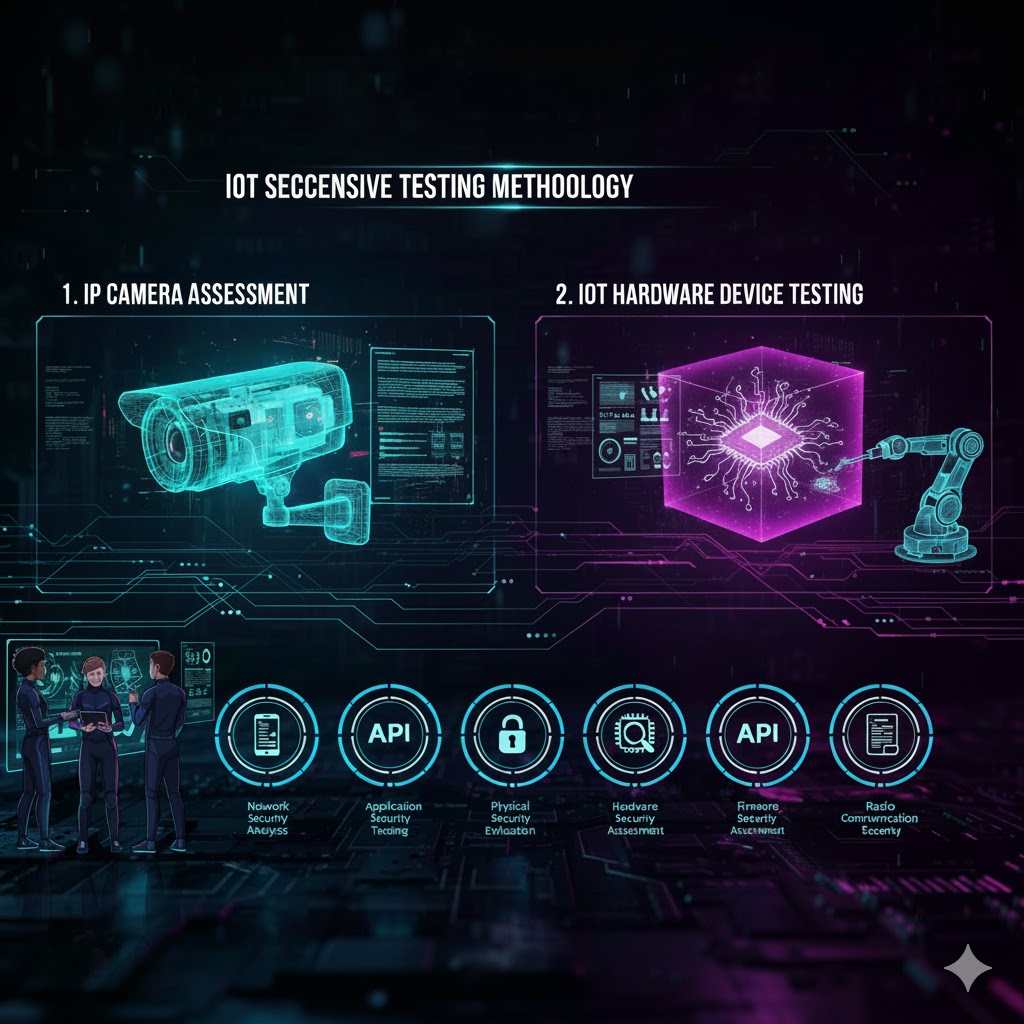

The Critical Need for IoT Security Testing
IoT devices present unique security challenges that traditional IT security approaches often miss:
- Proliferation of Attack Vectors: Each connected device expands your organization’s attack surface
- Physical Security Implications: Compromised devices can lead to physical security breaches
- Data Privacy Concerns: Cameras and sensors often collect sensitive personal and environmental data
- Supply Chain Risks: Third-party components and firmware introduce unknown vulnerabilities
Long Lifecycles: Many IoT devices remain in service for years without security updates
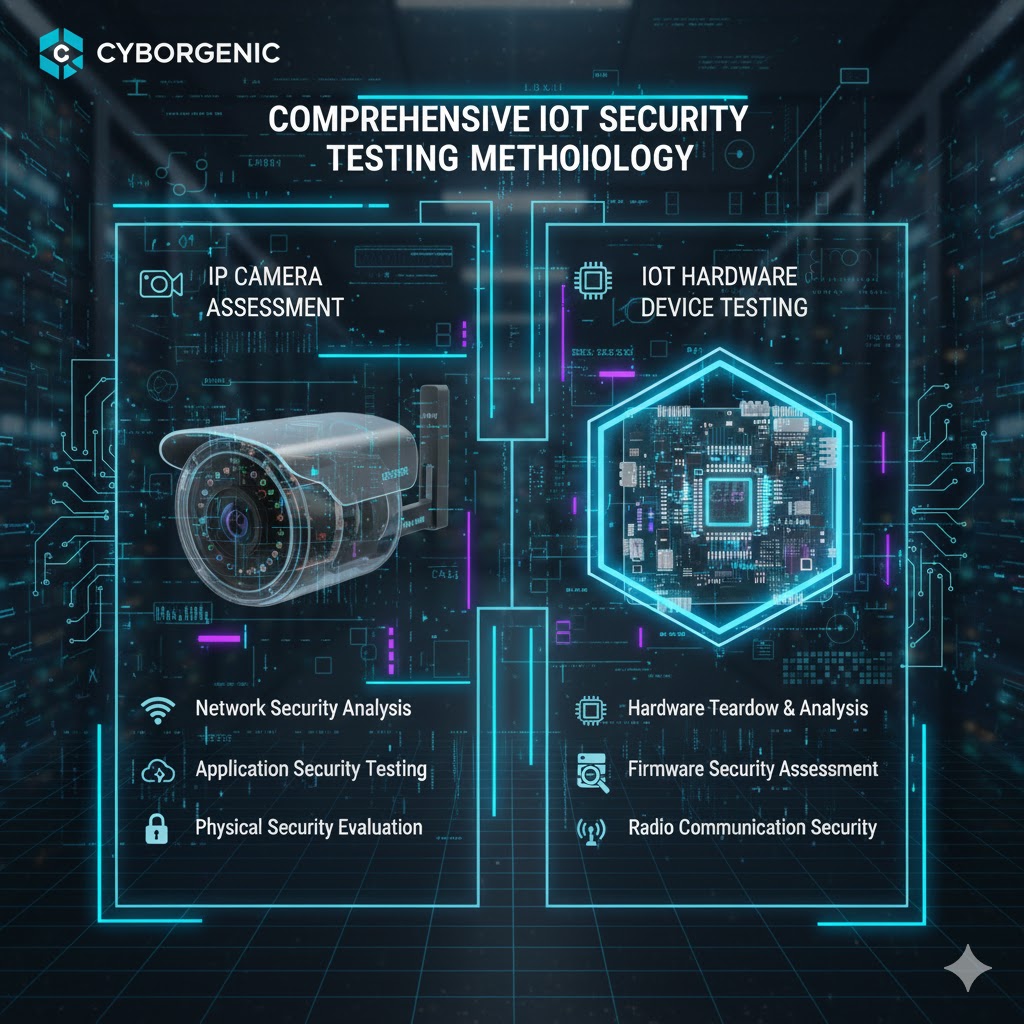
Our Comprehensive IoT Security Testing Methodology
- IP Camera Security Assessment
IP cameras are particularly vulnerable targets due to their network connectivity and data collection capabilities. Our testing includes:
Network Security Analysis:
- Default credential testing and brute-force vulnerability assessment
- Network service enumeration and port scanning
- Wireless security evaluation (WPA2/WPA3, rogue access point detection)
- Protocol analysis (RTSP, ONVIF, HTTP/HTTPS)
Application Security Testing:
- Web interface vulnerability assessment (XSS, CSRF, SQL injection)
- Mobile application security testing for companion apps
- API security testing for cloud-integrated cameras
- Firmware update mechanism security
Physical Security Evaluation:
- Tamper detection and physical bypass testing
- Storage media security (SD card encryption, data retention)
- Hardware interface security (USB, Ethernet)

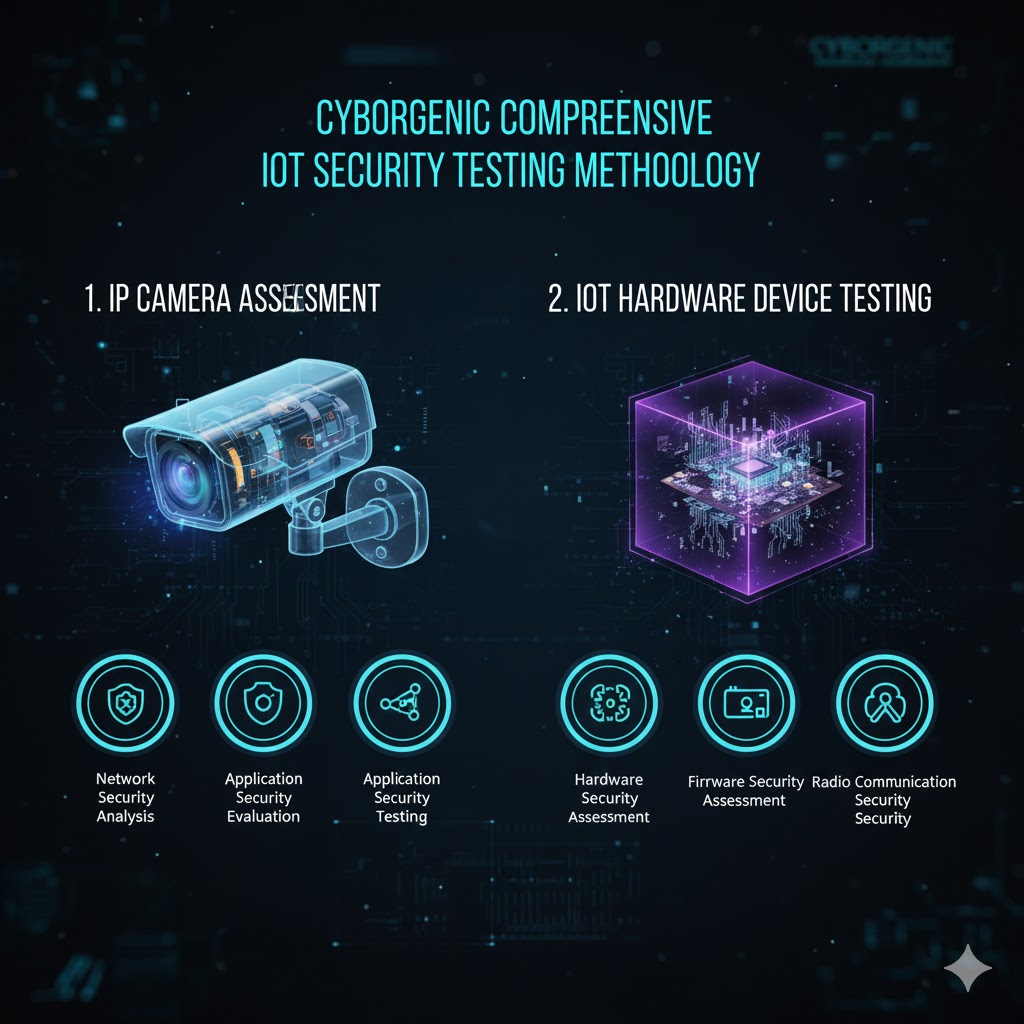
- IoT Hardware Device Testing
Our hardware security testing examines devices at the physical level to identify fundamental vulnerabilities
Hardware Teardown and Analysis:
- Component identification and supply chain assessment
- PCB analysis and test point identification
- Hardware debug interface testing (UART, JTAG, SWD)
- Memory chip extraction and analysis (eMMC, SPI Flash)
Firmware Security Assessment:
- Firmware extraction techniques (via hardware and network)
- Reverse engineering and binary analysis
- Backdoor and hardcoded credential identification
- Cryptographic implementation review
- Bootloader security and secure boot validation
Radio Communication Security:
- Wireless protocol analysis (Zigbee, Z-Wave, Bluetooth/BLE, LoRaWAN)
- Signal interception and replay attack testing
- Encryption implementation review
- Radio frequency jamming and denial-of-service testing
Common IoT Vulnerabilities We Uncover
Through our extensive IoT testing experience, we consistently identify these critical security gaps:
- Insecure Default Configurations
- Hardcoded administrative credentials
- Unnecessary services enabled by default
- Weak default encryption settings
- Lack of Secure Update Mechanisms
- Unencrypted firmware downloads
- Missing firmware signature verification
- Update server impersonation vulnerabilities
- Insufficient Authentication/Authorization
- Weak password policies
- Missing role-based access control
- Session management flaws
- Privacy Concerns
- Unencrypted data storage and transmission
- Excessive data collection without user consent
- Inadequate data retention and disposal policies
- Network Security Weaknesses
- Clear-text communication protocols
- Inadequate network segmentation
- Vulnerable network services
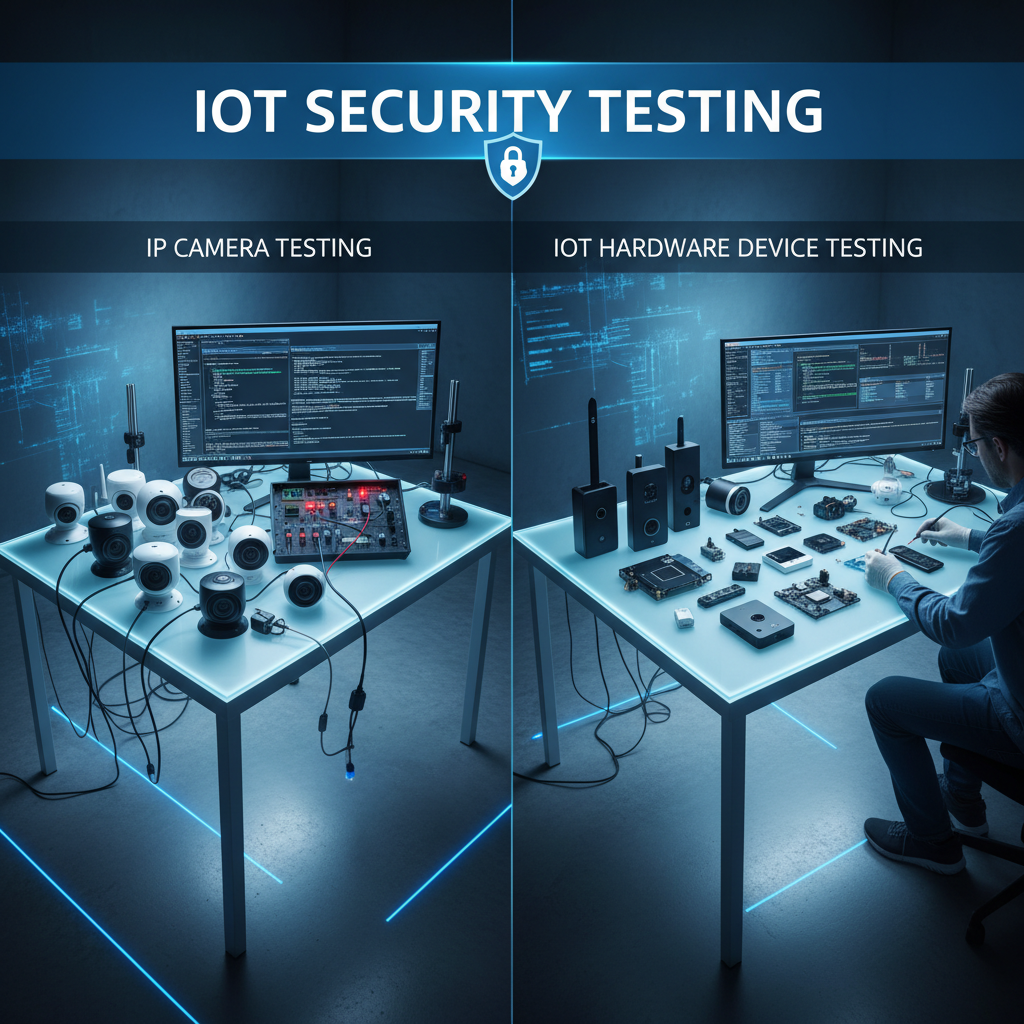
Our IoT Security Testing Framework
Phase 1: Reconnaissance and Mapping
- Device identification and asset inventory
- Network traffic analysis and communication mapping
- Interface enumeration (physical and network)
- Protocol reverse engineering
Phase 2: Vulnerability Assessment
- Automated and manual vulnerability scanning
- Configuration security review
- Cryptographic strength analysis
- Compliance checking against IoT security standards
Phase 3: Exploitation and Penetration Testing
- Credential brute-forcing and bypass techniques
- Privilege escalation testing
- Remote code execution attempts
- Physical security bypass testing
Phase 4: Post-Exploitation Analysis
- Lateral movement assessment
- Data exfiltration testing
- Persistence mechanism identification
- Impact analysis and business risk assessment
Industry-Specific IoT Testing Considerations
Enterprise Security Systems
- IP camera networks and access control systems
- Environmental monitoring sensors
- Smart building management systems
Industrial IoT (IIoT)
- SCADA and industrial control systems
- Sensor networks and monitoring equipment
- Predictive maintenance systems
Consumer IoT
- Smart home devices and assistants
- Wearable technology and health monitors
- Connected appliances and entertainment systems

IoT Security Standards and Compliance
Our testing methodology aligns with leading IoT security frameworks:
- IoT Security Foundation Compliance
- NIST IoT Cybersecurity Guidelines
- ETSI IoT Security Specification
- OWASP IoT Security Testing Guide
- Industry-specific regulations (HIPAA, PCI-DSS for IoT implementations)
he Cyborgenic Advantage in IoT Security
- Hardware Security Expertise: Our labs are equipped with specialized tools for hardware analysis, including logic analyzers, JTAG debuggers, and RF testing equipment.
- End-to-End Testing Approach: We examine the complete IoT ecosystem—device hardware, embedded software, mobile apps, cloud APIs, and network communications.
- Real-World Attack Simulation: Our testing goes beyond checklists to simulate sophisticated attacker techniques tailored to your specific IoT environment.
- Remediation Guidance: We provide detailed, actionable recommendations that consider the unique constraints of IoT devices, including resource limitations and operational requirements.
- Continuous Security Monitoring: For deployed IoT environments, we offer ongoing security monitoring and periodic retesting to address emerging threats.
Deliverables and Outcomes
- Detailed Technical Report: Comprehensive vulnerability analysis with risk ratings
- Executive Summary: Business-focused risk assessment and recommendations
- Proof of Concept: Demonstrated exploit scenarios and attack paths
- Remediation Plan: Step-by-step guidance for addressing identified vulnerabilities
- Compliance Documentation: Evidence for regulatory and standards compliance
Don’t let your connected devices become entry points for attackers.
Secure your IoT ecosystem with Cyborgenic’s comprehensive security testing services.