Business Impact Assessment
Strategic Business Resilience: Our Business Impact Assessment Service
In today’s interconnected operational environment, disruption is not a matter of if, but when. Whether from cyber incidents, system failures, or external events, downtime directly impacts your revenue, reputation, and regulatory standing. A Business Impact Assessment (BIA) is the critical first step in building true resilience. It moves beyond generic disaster plans to provide a data-driven, prioritized blueprint for recovery, ensuring your most vital operations are protected first. We don’t just identify technical vulnerabilities; we quantify the operational and financial impact of disruption to your core business functions, enabling intelligent investment in continuity and recovery.

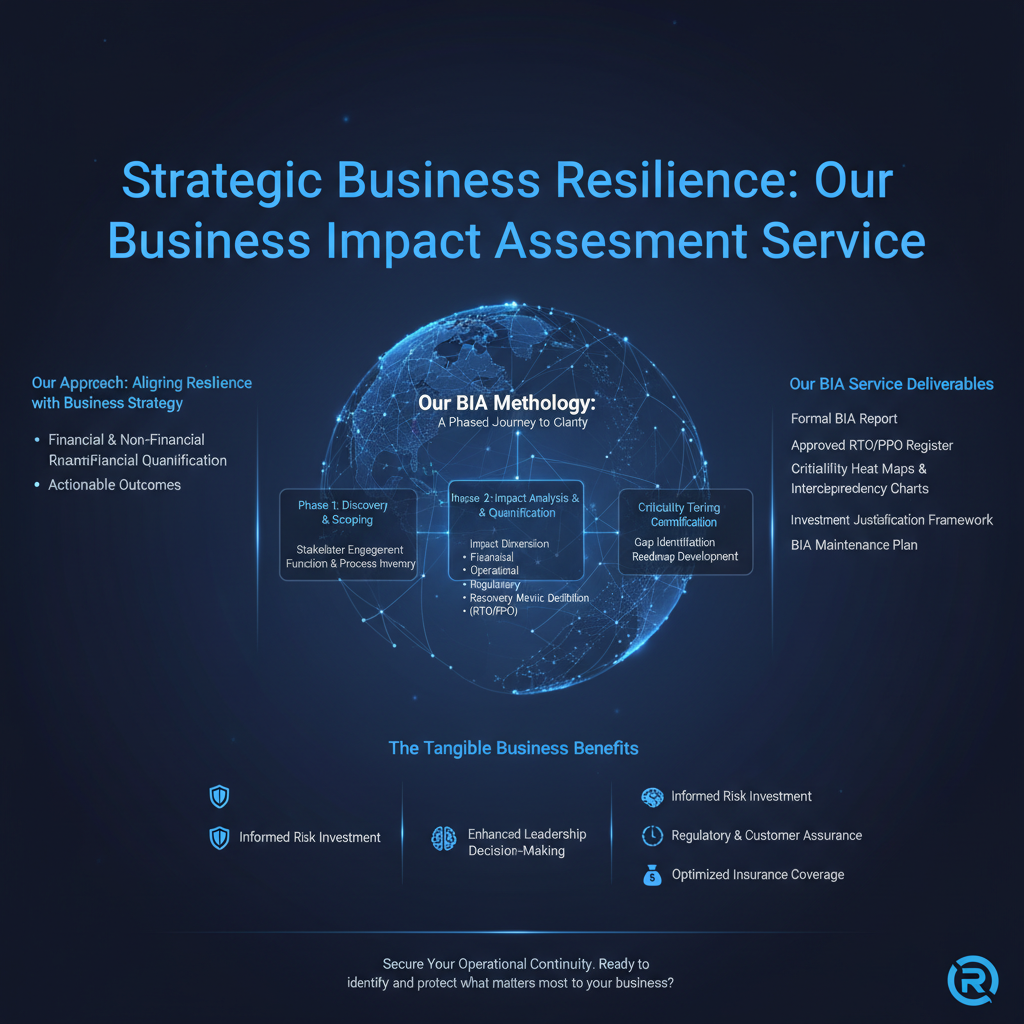
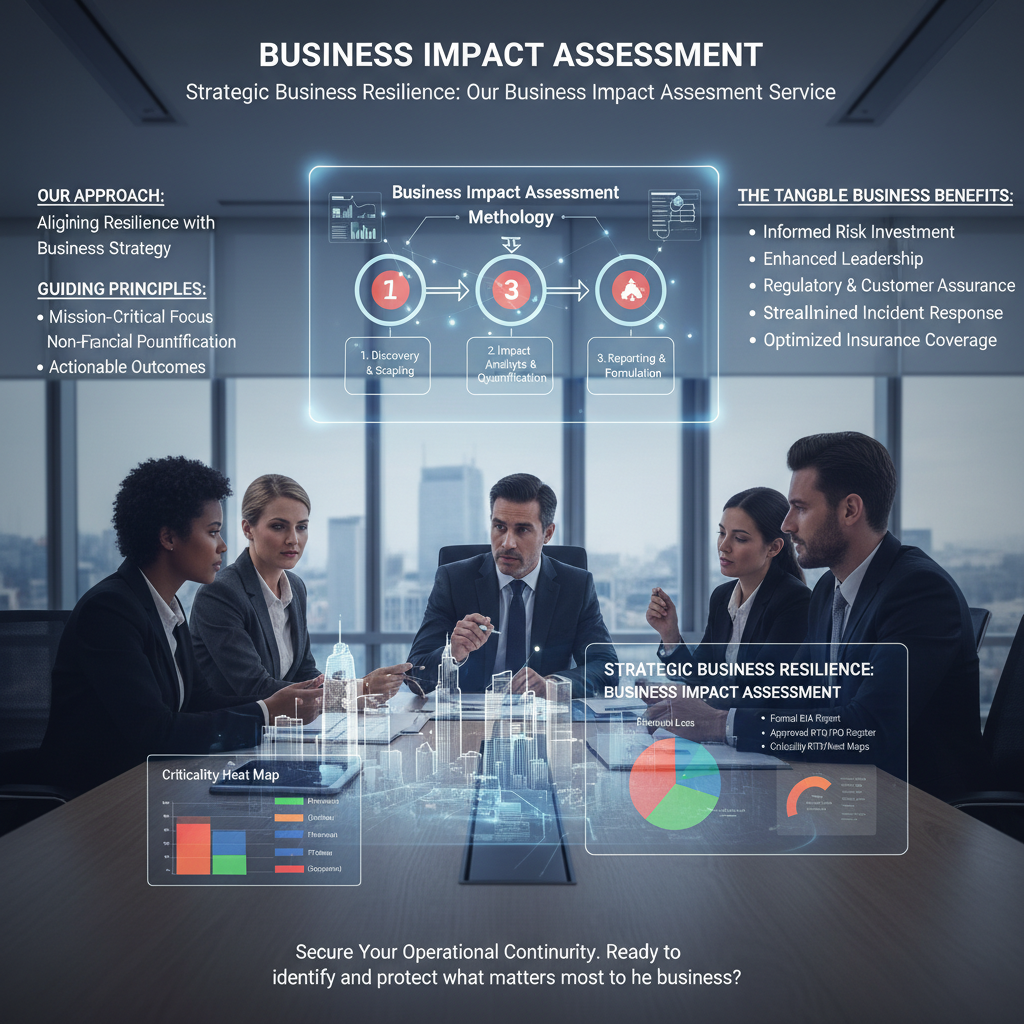
Our Approach: Aligning Resilience with Business Strategy
Our BIA methodology is built on a principle of business-led prioritization. We collaborate directly with your department heads and process owners to understand what truly drives your organization’s value, ensuring your continuity strategy supports strategic objectives, not just IT systems.
Guiding Principles:
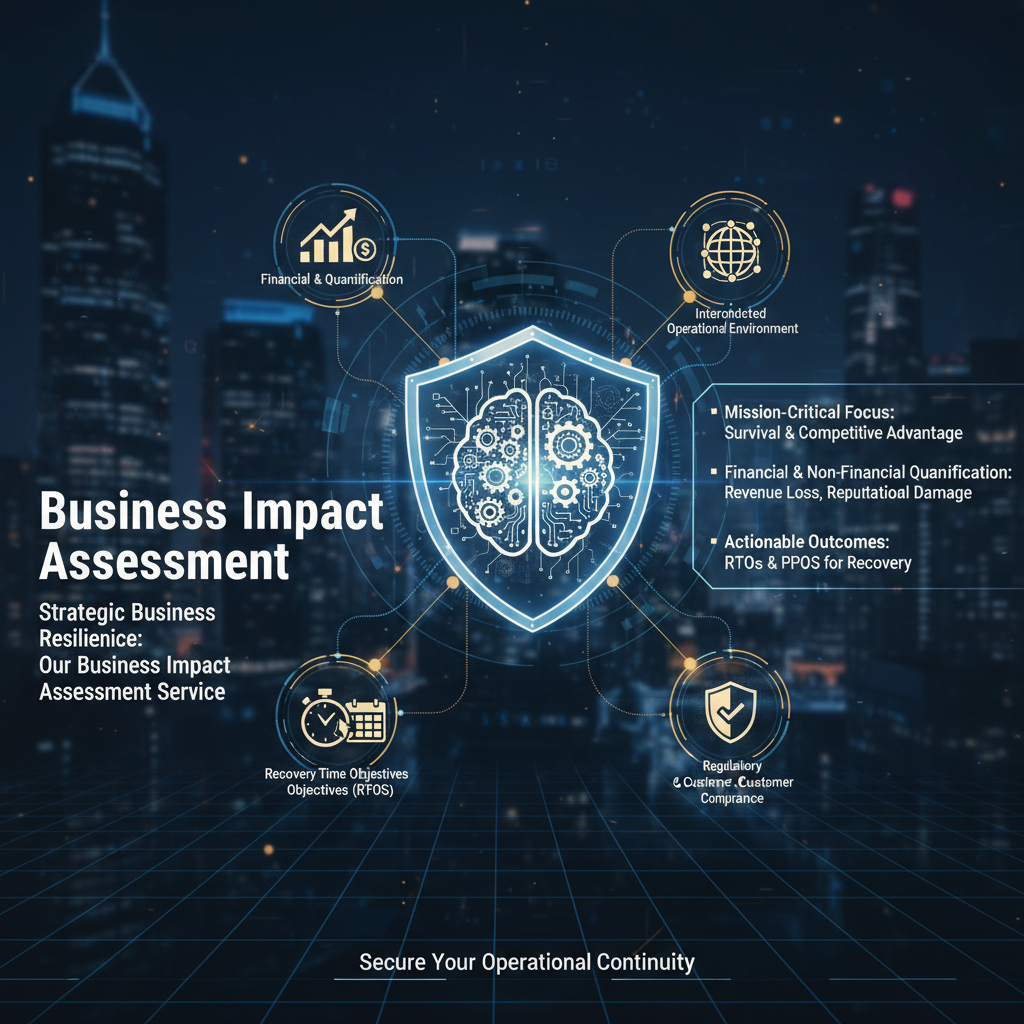
- Mission-Critical Focus: We distinguish between what is important and what is essential for survival and competitive advantage.
- Financial & Non-Financial Quantification: We measure impact in terms of revenue loss, regulatory fines, customer attrition, and reputational damage.
- Actionable Outcomes: The assessment delivers clear Recovery Time Objectives (RTOs) and Recovery Point Objectives (RPOs) for each function, forming the basis of your continuity budget and strategy.
Our BIA Methodology: A Phased Journey to Clarity
Our proven, three-phase methodology transforms operational understanding into a prioritized resilience roadmap.
Phase 1: Discovery & Scoping
We begin by mapping your business ecosystem to define the assessment parameters.
- Stakeholder Engagement: Interview leadership and process owners across all business units (Finance, HR, Sales, Operations, IT).
- Function & Process Inventory: Identify and catalog critical business functions, supporting processes, and their interdependencies.
- Resource Identification: Document the key applications, data, systems, vendors, and personnel required for each function to operate.
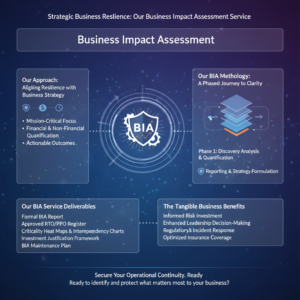

Phase 2: Impact Analysis & Quantification
This is the core analytical phase where we assign measurable impact values.
- Impact Dimension Evaluation: For each function, we assess the consequences of disruption over time across key dimensions:
- Financial: Lost sales, incremental costs, contractual penalties.
- Operational: Productivity loss, delayed projects, inability to deliver services.
- Regulatory: Fines, license revocations, non-compliance reporting.
- Reputational: Customer trust erosion, brand damage, stakeholder confidence.
- Tolerance Benchmarking: Through workshops, we establish the Maximum Tolerable Period of Disruption (MTPD) for each function.
- Recovery Metric Definition: We derive the specific Recovery Time Objective (RTO) and Recovery Point Objective (RPO) from the MTPD, creating clear technical targets for IT and operations teams.
Phase 3: Reporting & Strategy Formulation
We synthesize findings into an executive-ready strategy.
- Criticality Tiering: Functions are categorized into tiers (e.g., Critical, Essential, Supportive) based on impact severity and MTPD.
- Gap Identification: Compare current recovery capabilities against the defined RTOs/RPOs to highlight areas of risk.
- Roadmap Development: Provide a prioritized investment and action plan to address gaps, focusing resources on protecting your most critical assets and processes first.
Our BIA Service Deliverables
Our engagement provides you with a complete resilience toolkit:
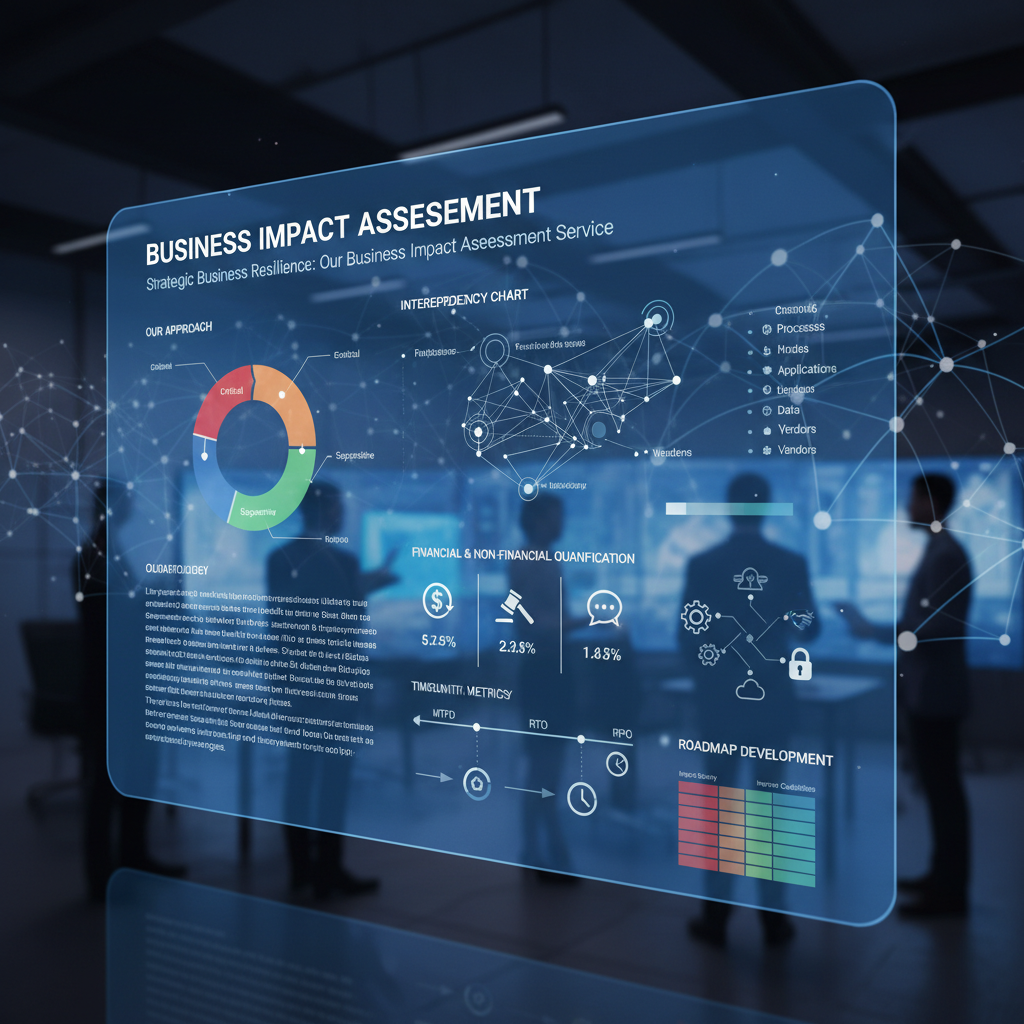
- Formal BIA Report: Detailed documentation of critical functions, impacts, interdependencies, and recovery metrics.
- Approved RTO/RPO Register: A sanctioned, board-level document outlining recovery objectives for all prioritized services.
- Criticality Heat Maps & Interdependency Charts: Visual tools for easy communication of risk and reliance across the organization.
- Investment Justification Framework: Data to support business cases for continuity spending, cyber insurance, and cloud migration.
- BIA Maintenance Plan: Guidelines for keeping the assessment current with business changes.
The Tangible Business Benefits
- Informed Risk Investment: Justify and direct continuity spending to areas with the highest financial and operational exposure.
- Enhanced Leadership Decision-Making: Provide the board with quantifiable data on disruption risks for strategic planning.
- Regulatory & Customer Assurance: Demonstrate due diligence to auditors, regulators, and key clients.
- Streamlined Incident Response: Reduce recovery time and confusion during a crisis with pre-defined priorities.
- Optimized Insurance Coverage: Use impact data to negotiate appropriate cyber and business interruption insurance terms.
Secure Your Operational Continuity
Don’t wait for a disruption to reveal your critical vulnerabilities. A proactive Business Impact Assessment provides the foundational intelligence to build a resilient, responsive organization.
Ready to identify and protect what matters most to your business?
Contact our experts to initiate your tailored BIA.
Email: sales@cyborgenic.com | Phone: +91 97732 98161
Build resilience based on data, not guesswork.